




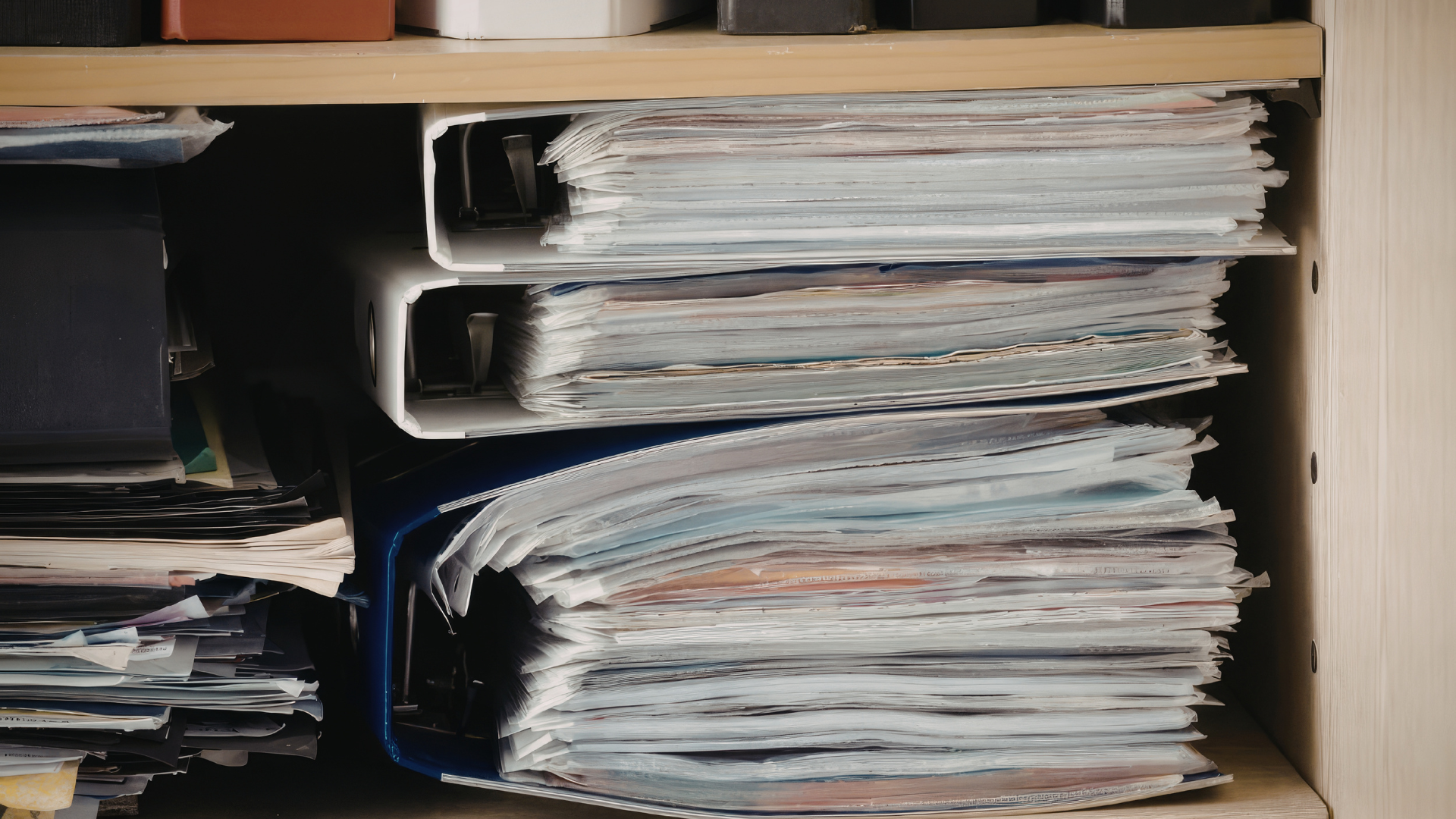
If your office storage is starting to feel more like a liability than an asset, you’re not alone.
Across Phoenix, many businesses hold onto documents far longer than necessary. Filing cabinets overflow, storage rooms fill up, and off-site storage costs quietly increase month after month. At some point, the question isn’t “Where do we store this?” It becomes “Why are we still keeping this?”
Understanding when to stop storing documents and start shredding is key to reducing risk, improving efficiency, and taking back control of your workspace.
The Hidden Cost of Holding Onto Documents
Storing documents feels safe. It gives the impression that everything is accounted for and accessible if needed. But over time, excessive storage can create more problems than it solves.
Businesses dealing with storage overflow often face:
- Rising storage costs (physical or off-site)
- Difficulty locating important documents
- Increased risk of data exposure
- Reduced office efficiency and usable space
In many cases, documents are kept “just in case,” even when they no longer serve a legal or operational purpose.
When Storage Stops Making Sense
Not all documents need to be kept indefinitely. Holding onto outdated records can increase your liability, especially if they contain sensitive information. So how do you know when it’s time to stop storing and start shredding?
Documents Beyond Retention Periods
Every business should follow a document retention timeline. Once records exceed those timelines, they should be securely destroyed. Keeping documents longer than required:
- Adds unnecessary risk
- Complicates audits
- Increases storage costs
Duplicate and Redundant Files
Many offices unknowingly store multiple copies of the same documents. These duplicates:
- Offer no additional value
- Create confusion during audits
- Take up unnecessary space
Shredding redundant files is one of the fastest ways to reduce clutter.
Outdated Operational Documents
Old reports, internal memos, and completed project files often sit in storage long after they’re useful. If documents are no longer relevant to your current operations, they should not be taking up valuable space.
Inactive Client or Employee Files
Once retention requirements are met, keeping old client or employee records increases your exposure to data breaches. Sensitive information should never be stored indefinitely; it should be securely destroyed when no longer needed.
Storage vs Shredding: What’s the Right Balance?
The goal isn’t to eliminate storage; it’s to store what matters and securely destroy what doesn’t.
Keep:
- Active contracts and agreements
- Recent financial records
- Compliance-required documentation
- Ongoing client or employee files
Shred:
- Expired records beyond retention timelines
- Duplicate files
- Outdated business documents
- Sensitive information no longer required
When businesses strike the right balance, they reduce risk while improving efficiency.
Why Improper Storage Can Be Risky
One of the biggest risks of over-storage is that sensitive information remains accessible for longer than necessary. This increases the chances of:
- Data breaches
- Identity theft
- Compliance violations
- Internal misuse of information
Simply locking documents in a cabinet isn’t enough. If those records are no longer needed, they shouldn’t exist at all.
Why Professional Shredding Is the Better Solution
When it comes time to dispose of documents, how you do it matters. Throwing documents away or relying on office shredders isn’t secure or efficient. Professional document shredding services in Phoenix ensure:
- Destruction of sensitive information
- Compliance with data protection standards
- Efficient handling of large volumes of documents
- Reduced burden on internal teams
One-Time Purge Shredding: A Practical Reset
If your office is dealing with storage overflow, a one-time shredding purge is often the most effective solution. Instead of managing documents piece by piece, businesses can:
- Eliminate years of unnecessary paperwork
- Free up storage space immediately
- Reduce risk in a single step
This is especially useful for:
- Office cleanouts
- Preparing for audits
- Transitioning to digital systems
- Moving to a new location
Moving Toward Smarter Document Management
Once storage is under control, the next step is preventing the problem from returning. Businesses that manage documents effectively:
- Review records regularly
- Follow clear retention policies
- Schedule shredding as part of routine operations
Some organizations choose recurring shredding services to ensure documents are consistently disposed of before they build up again.
Phoenix Businesses Are Rethinking Storage
With rising costs, increasing compliance requirements, and growing data security concerns, more Phoenix businesses are re-evaluating how they handle documents. The shift is clear:
- Less storage
- More secure destruction
- Smarter document management
Instead of holding onto everything, businesses are focusing on keeping what’s necessary and securely shredding the rest.
Take Control of Your Office Space and Security
If your storage is overflowing, it’s not just a space issue; it’s a signal that your document management process needs an update. By identifying what to keep and what to destroy securely, you can:
- Reduce risk
- Improve organization
- Lower storage costs
- Create a more efficient workspace
Schedule Your Office Cleanout Shredding in Phoenix
If your business is ready to move from storage overload to a more efficient system, now is the time to act.
Assured Document Destruction provides secure, reliable business shredding services in Phoenix, including one-time purge shredding, to help you quickly and safely clear out unnecessary documents. Contact us today to schedule your shredding service.